
How Much Does a Brake Job Cost in Toronto? (2026 Price Guide)
A plain-English breakdown of what a brake job actually costs across Toronto and the GTA in 2026 — pads, rotors, calipers, front vs rear — plus how to tell a fair quote from an inflated one.
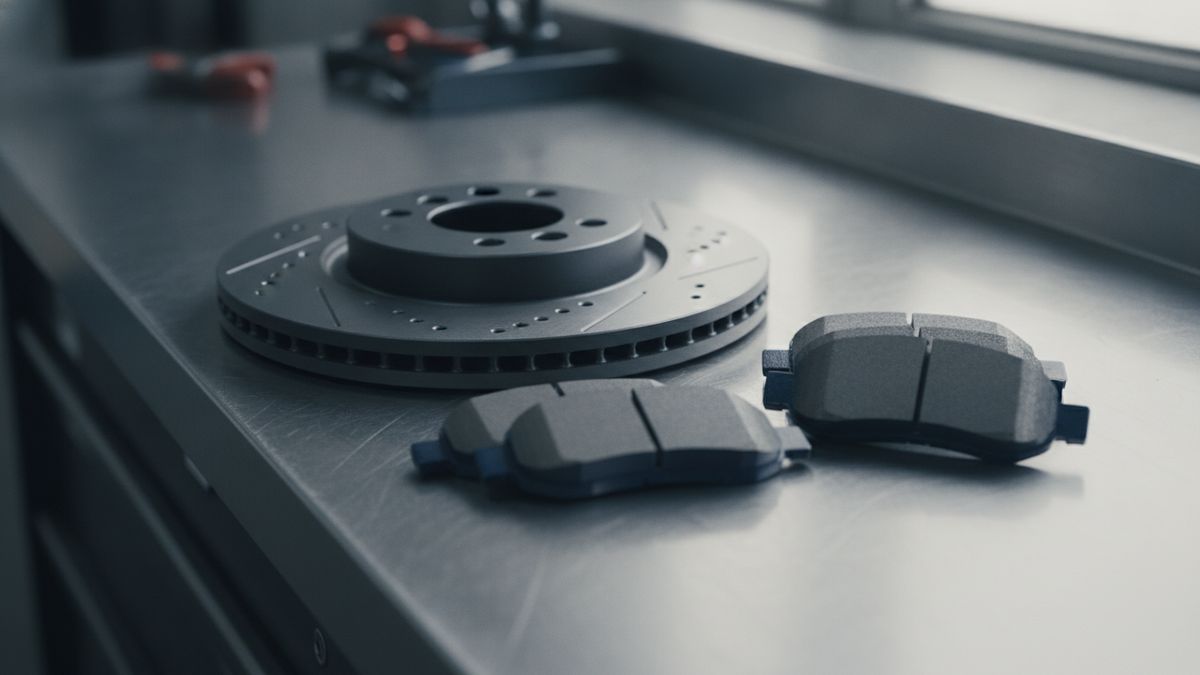
The Short Answer: 2026 Brake Job Prices in the GTA
If you just want a ballpark, here's what most Toronto-area drivers are paying in 2026. These are real-world, all-in ranges (parts plus labour, before HST) for a typical passenger car or crossover at an independent shop in the GTA. Dealerships and luxury or EV models sit at the higher end or beyond it.
- Brake pads only (one axle): roughly $180–$400 CAD
- Pads and rotors (one axle): roughly $350–$750 CAD
- Pads and rotors, both axles (full brake job): roughly $700–$1,400 CAD
- Caliper replacement (per caliper): roughly $300–$700 CAD including the pad on that corner
- Brake fluid flush: roughly $100–$180 CAD
Why such wide ranges? A Honda Civic and a Ford F-150 do not use the same parts, and a downtown Toronto shop with high rent doesn't quote the same as one in Scarborough or Brampton. The numbers above are estimates that vary by vehicle, part quality, and shop — treat them as a sanity check, not a fixed price. The rest of this guide explains what moves the number up or down so you can read your own quote with confidence.
Front vs Rear: Why the Price Isn't the Same
Front brakes almost always cost more than rear brakes, and they wear out faster. On most cars the front brakes do 60–70% of the stopping work, because weight shifts forward every time you brake. That means front pads and rotors are usually larger, and they need replacing more often — it's common to do two front brake jobs for every one rear.
Rear brakes are often cheaper, but not always simpler. Many newer vehicles use an electronic parking brake built into the rear caliper, which requires a scan tool to retract the piston. If a shop does this by hand or forces it, they can damage the caliper. That extra step is legitimate labour, so a slightly higher rear quote on a 2020-or-newer car isn't automatically a rip-off.
When a shop quotes you, ask whether the price is per axle or for all four corners. A $400 quote for the front axle and a $400 quote for the whole car are very different things, and this is one of the most common sources of confusion when drivers compare estimates.
What Actually Drives the Price
Three things move a brake quote more than anything else: the vehicle, the parts, and the shop's labour rate.
- Your vehicle: A compact commuter is cheap to brake. Large trucks, European luxury cars (BMW, Audi, Mercedes), and EVs and hybrids with regenerative braking often need pricier, model-specific parts. EVs actually wear brakes slowly, but when they do need service the parts can be dear.
- Parts tier: Economy pads might run $40–$70 an axle; premium ceramic pads from a name brand can be $100–$180. Rotors range from ~$60 each for a basic car to $200+ each for a performance or heavy vehicle. Cheaper isn't always false economy, but bargain-bin pads often mean more dust, more noise, and a shorter life.
- Labour rate: GTA shop labour in 2026 generally runs $120–$180+ per hour, with dealerships and downtown Toronto locations at the top. A front brake job is usually 1–2 hours of labour.
A dealership will often quote noticeably more than a trusted independent for the exact same work, largely due to labour rates and OEM-only parts. That premium is sometimes worth it for a vehicle under warranty — but for an out-of-warranty car, a reputable independent frequently does identical-quality work for less.
Replace the Rotors, or Machine Them?
Older advice was to resurface (machine) rotors — shaving off a thin layer on a lathe to give the new pads a smooth surface. It can still make sense, but it's become less common, and here's the honest reason: modern rotors are made thinner and lighter to save weight and fuel, so many don't have enough material to safely machine. Every resurfacing removes metal, and a rotor below its minimum thickness spec (stamped on the rotor itself) overheats, warps, and becomes unsafe.
Machining makes sense when the rotors are still well above minimum thickness, aren't cracked or heavily grooved, and you're catching wear early. Replacement makes sense when the rotors are near minimum spec, are warped (you feel a pulsing or shudder when braking), show deep grooves or heat cracks, or when new rotors cost about the same as the labour to machine the old ones — which, given today's part prices, is often the case.
Be a little skeptical of a shop that insists on new rotors with every single pad change regardless of their condition, and equally skeptical of one that machines rotors that are clearly worn out to save a few dollars. A trustworthy shop measures the rotor thickness and shows you the number.
How to Avoid Overpaying on Brakes in Toronto
Brakes are one of the easier repairs to shop around for, because the job is well-defined and the parts are standardized. A few habits keep you from overpaying:
- Get the quote itemized. You want parts and labour listed separately, the part brand named, and whether it's per axle or all four corners. Vague "brake service — $900" quotes hide a lot.
- Compare at least two or three quotes. Prices for the identical job routinely vary by hundreds of dollars across the GTA. This is exactly the friction Carpals is built to remove — you describe the problem once and nearby shops send you competing quotes, so you can compare real numbers without driving around for estimates.
- Don't fall for the upsell reflex. "While we're in there" recommendations (calipers, fluid, hardware) are sometimes genuinely needed and sometimes padding. Ask why each item is required and whether it can wait.
- Beware quotes that are suspiciously cheap, too. Rock-bottom pricing can mean the lowest-grade pads or skipped steps like new hardware and a fluid check. The goal is fair value, not just the smallest number.
One more note specific to Ontario: brakes are a safety inspection item. If you're buying or selling a used car and it needs a safety certificate, worn brakes will fail it — so factor that in when a private-sale car "just needs brakes."
When to Get Your Brakes Checked
Don't wait for a price guide to tell you it's time — your car will tell you first. Get an inspection promptly if you notice any of these:
- A high-pitched squeal when braking (that's the wear indicator doing its job)
- Grinding — metal on metal, which usually means the pads are gone and you may now be damaging rotors, turning a cheap job into an expensive one
- A pulsing or shuddering brake pedal, often a sign of warped rotors
- Longer stopping distances, a soft or spongy pedal, or a brake warning light
Catching brakes early is the single biggest way to keep the cost down. Pads are cheap; letting them wear into the rotors and calipers is not. In GTA stop-and-go traffic and through road-salt winters, brakes take a beating — an annual check, or with every second oil change, is reasonable for most drivers.
Frequently asked questions
How much is a full brake job in Toronto in 2026?
A complete brake job — pads and rotors on both the front and rear axles — typically runs about $700–$1,400 CAD before HST at a GTA independent shop, depending on your vehicle and the part quality. Trucks, luxury models and dealership service push toward or past the top of that range.
Should I replace or resurface my rotors?
Resurfacing (machining) works only if the rotors are still comfortably above their minimum thickness spec and aren't cracked, warped, or deeply grooved. Because modern rotors are made thin, many can't be safely machined, and new rotors often cost about the same as the labour to resurface old ones — so replacement is increasingly the practical choice. A good shop measures the rotor and shows you the number.
Why are front brakes more expensive than rear brakes?
Front brakes handle 60–70% of your car's stopping power, so the parts are larger and wear out faster — you'll often do two front jobs for every rear one. That said, rear brakes on newer cars can carry extra cost because many use an electronic parking brake that needs a scan tool to service correctly.
Is it cheaper to get brakes done at a dealership or an independent shop?
Independents are usually cheaper for out-of-warranty vehicles, thanks to lower labour rates and flexibility on parts brands, while dealerships charge more but use OEM parts and can be worth it under warranty. Comparing a couple of quotes for the identical job is the reliable way to see the real gap — differences of a few hundred dollars across the GTA are common.
How often should I replace my brake pads?
Most brake pads last roughly 40,000–80,000 km, but GTA stop-and-go driving and salty winters can shorten that. Rather than watching the odometer, watch for squealing, grinding, or a pulsing pedal, and have the brakes inspected annually or at every second oil change.
Stop calling around — post your job and let shops compete
Describe your car problem once and nearby shops send you competing quotes. Free for customers — no booking fees, and you pay the shop directly.